
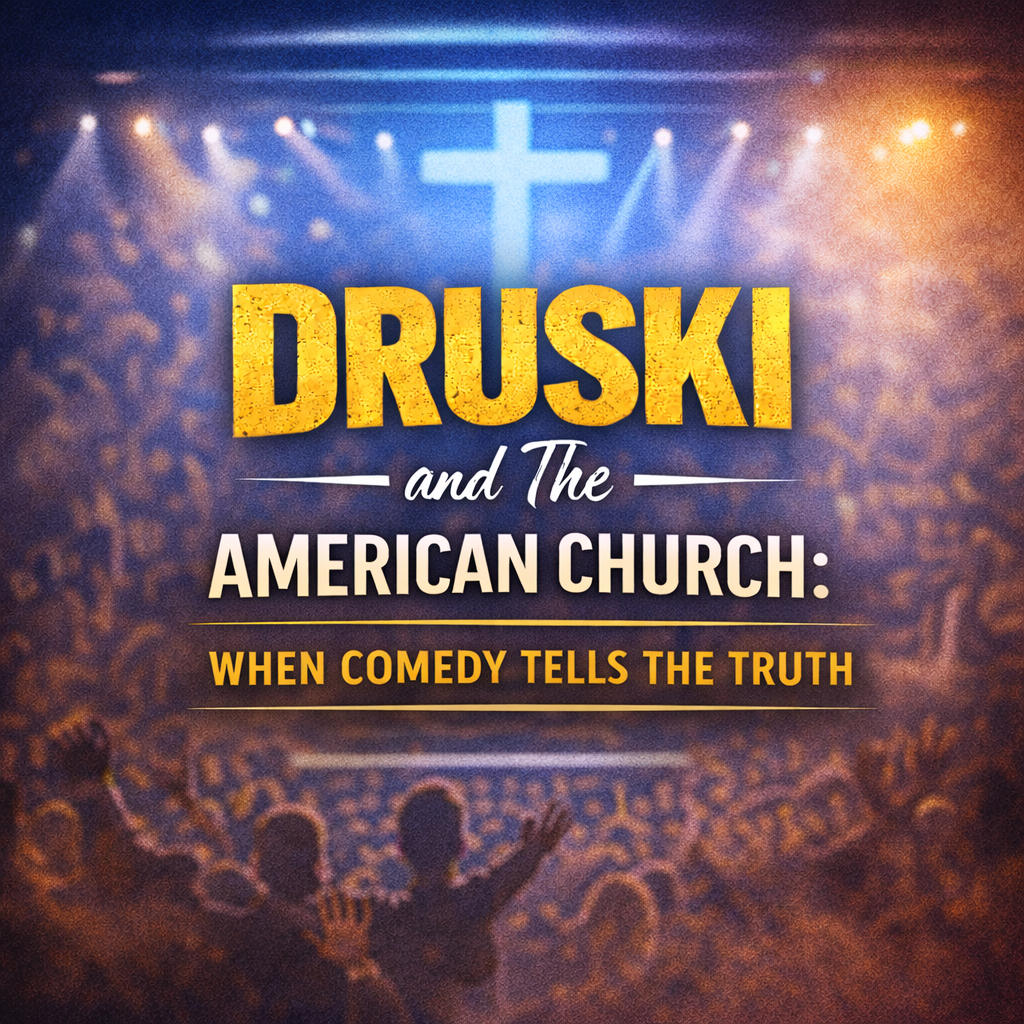
Recently, a viral video by Druski sparked a level of cultural reaction few moments ever reach—hundreds of millions of views, millions of comments, and widespread debate across social media. The video openly mocked familiar practices associated with modern megachurch culture—performative spirituality, celebrity pastors, emotional manipulation, and the blurred line between faith and entertainment.
Many were offended. But offense alone is not proof of error.
What made this moment different is simple: the satire worked because it pointed at something real.
Comedy as a Mirror, Not an Attack
Great comedians have always done one thing well—they expose truth by exaggeration. They don’t invent cultural flaws; they highlight them. The discomfort people feel is often proportional to how close the joke lands to reality.
If the behaviors being mocked did not exist, the joke would have fallen flat. Instead, it resonated because many believers—quietly and privately—have witnessed these same patterns for decades.
This wasn’t mockery of Christ.
It was mockery of counterfeit representations of Him.
Scripture Anticipated This Moment
The Bible is not silent about religious posturing or distorted faith.
Paul describes a group whose spirituality looks convincing on the surface but is empty at its core:
“Their end is destruction, their god is their belly, and they glory in their shame, with minds set on earthly things.”
— Philippians 3:19
This isn’t atheism being described.
It’s misdirected religion—faith driven by appetite, image, power, and gain.
Elsewhere, Scripture warns:
“See to it that no one takes you captive by philosophy and empty deceit, according to human tradition…”
— Colossians 2:8
What was mocked in that viral moment wasn’t holiness.
It was human tradition masquerading as divine authority.
God Uses Unexpected Voices
One of the most uncomfortable truths for religious people is this:
God is not limited to insiders.
Throughout Scripture, God repeatedly uses outsiders, critics, and even adversaries to expose corruption among His own people. Truth does not lose its authority because of the messenger.
In this case, a comedian became a cultural mirror—forcing millions to ask, “Is that what church is supposed to look like?”
That question alone is a win for truth.
This Separates the Real From the Fake
Jesus Himself said:
“You will recognize them by their fruits.”
— Matthew 7:16
Moments like this help people see the difference between:
The true Church (a people formed by repentance, humility, and obedience)
And religious theater (built on charisma, control, and consumption)
If someone watches that video and thinks, “That doesn’t look like what Jesus taught,” then discernment has already begun.
The Responsibility Now Falls on Believers
The response should not be outrage.
It should be embodiment.
If false versions of faith are exposed, then it becomes the responsibility of true believers to:
Live with integrity
Teach the Word without manipulation
Practice holiness without performance
Love without spectacle
The early church was recognized not by lights, stages, or personalities—but by devotion, sacrifice, and truth (Acts 2:42–47).
Conclusion: Truth Is Not the Enemy of the Gospel
What threatens the gospel is not exposure.
What threatens it is imitation without substance.
If satire helps people distinguish between the real and the counterfeit, then—even unintentionally—it has served a redemptive purpose.
The answer is not to silence critics.
The answer is to be the Church Christ actually described.
When the real is lived openly, the fake eventually collapses on its own.
