
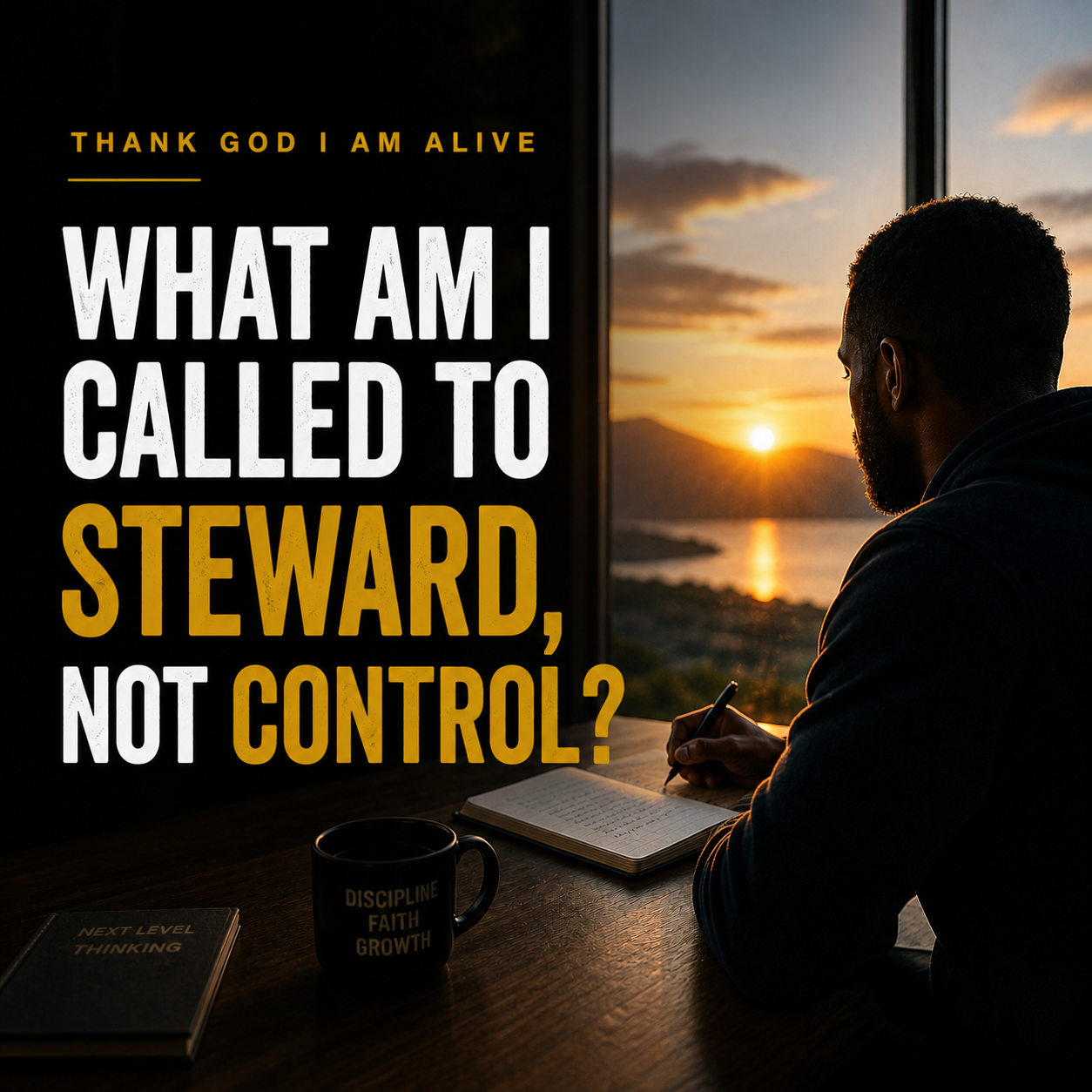
I’ve been sitting with a question this week that’s been quietly confronting me in different areas of my life: what am I actually called to steward, and what have I been trying to control?
At first, it didn’t seem like a big distinction. But the more I paid attention, the more I realized how often I blur that line. Control feels productive. It looks like discipline. It even convinces you that you’re being responsible. But if I’m honest, there’s usually tension underneath it. Pressure. Frustration. That subtle feeling that something isn’t moving the way I think it should.
That’s the giveaway.
Control is always tied to outcomes. It’s my attempt to force alignment, to speed things up, to make people respond a certain way, or to make situations unfold on my timeline. And when it doesn’t happen, it creates friction—not just externally, but internally.
Stewardship feels different. It’s quieter, but it’s heavier in a more honest way. It forces me to take responsibility for what’s actually mine without overreaching into what isn’t. It centers me back on what I can control: how I show up, how consistent I am, how disciplined I am when nobody is watching, and whether I’m executing on what I already know I’m supposed to be doing.
That shift alone changes the way I move.
Because once I stop trying to control outcomes, I’m left with a more direct question: am I actually managing what I’ve been given well?
Am I stewarding my time with intention, or just reacting to the day? Am I developing my gifts, or waiting for the right moment to use them? Am I leading the people around me, or trying to force them into alignment with how I think they should move?
That last one has been real for me. You can’t control people. Not your spouse, not your children, not your team. And the moment you try, you start damaging the very thing you’re responsible for building. Influence doesn’t come from control—it comes from consistency, clarity, and example over time.
So I’ve been making a simple adjustment this week. Instead of asking how to make things work, I’ve been asking whether I’m prepared for when they do. Instead of trying to force results, I’ve been focusing on tightening up my habits, my structure, and my execution. Instead of trying to control timing, I’ve been paying attention to whether I’m actually ready for the next level I say I want.
That’s where the real work is.
If you want something practical to take from this, take a few minutes and audit your life honestly. Look at where you feel the most tension right now. Where you feel frustrated, impatient, or like things aren’t moving fast enough. Then ask yourself one question: am I trying to control this, or am I actually stewarding it?
If it’s control, you’ll feel it immediately. And once you see it, you can release it.
Then redirect that energy back into what is yours. Your effort. Your discipline. Your consistency. Your growth. The things that compound over time whether anyone sees it or not.
Because at the end of the day, I’m not here to control my life. I’m here to manage it well. To handle what’s in front of me with intention and discipline, and trust that growth comes from alignment—not force.
Thank God I am alive, because I still have time to get that right.
